As we come to the end of the year, and my thoughts turn to my next trip (mid May), I remember that I was going to use this blog as a collection of all sorts of information related to the GR11 route. Looking back at my first posts, I notice that they are fairly bare bones and talk little about the places we went through, their history and cultural significance etc. So I’m going to attempt to back fill a little and add a few posts to supplement those about the walk itself.
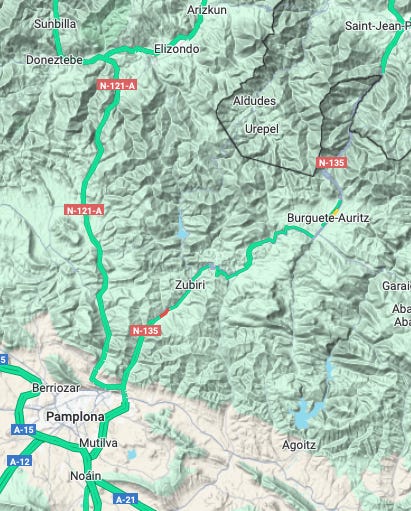
My starting point is where we left off in June - the village of Burguete (known as Auritz in Basque) in Navarra. Burguete is a small settlement - just over 200 inhabitants - and is situated some 45km from Pamplona at an elevation of 900m. It is on the Camino Francés, the most popular of the routes of the Camino de Santiago, which starts at St Jean Pied de Port, around 20km down the mountain in the Pyrénées Atlantiques department of France.
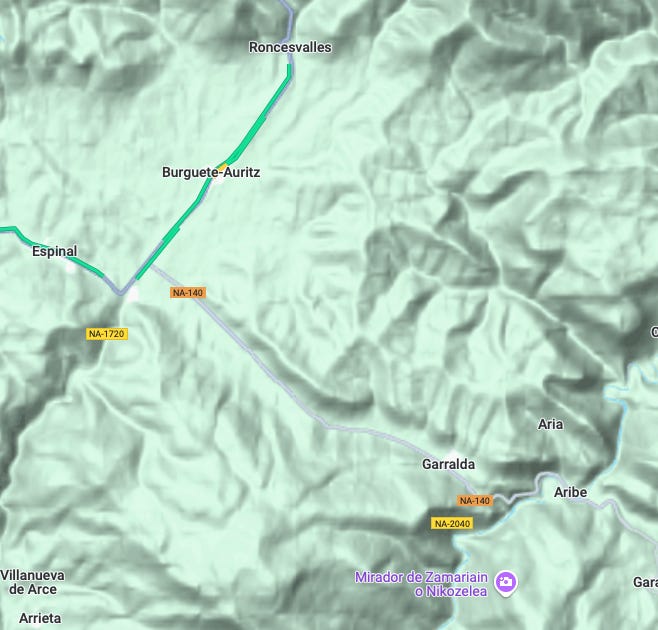
A couple of miles before Burguete is the first stop over on the Camino, the village of Roncesvalles (Orreaga in Basque/Roncevaux in French) where pilgrims stay at the 12th century church/monastery of Santa María. Like many points in the Pyrenees, Roncesvalles has historical significance being on the strategically important country border: it is famous for being the location of the death of Roland in 778AD during the Battle of Roncevaux Pass when Charlemagne’s rearguard was destroyed by the Basque tribes.

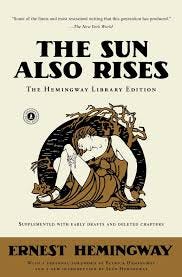
But for me, the fascination with Burguete stems from its connection with one of my literary heroes, Ernest Hemingway (revisionist history may judge me for political incorrectness given that much of his behaviour would now be classified as ‘toxic masculinity’). Burguete was the location of part of his first proper novel, The Sun Also Rises (1926)* where the main protagonist Jake Barnes and his friend Bill Gorton go trout fishing in the Irati River. I say first proper novel, as he wrote The Torrents of Spring beforehand, but this obvious pastiche of fellow author Sherwood Anderson was widely seen to be a mechanism to get him out of his publishing contract with Boni & Liveright. I will discuss more about this chapter below, but first a note on Hemingway’s actual itinerary in the area.
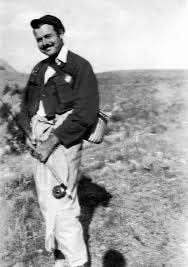
Hemingway visited Burguete for the first in mid July 1924, straight after attending the Fiestas de San Fermín in Pamplona; the following year he visited before the Fiestas, which was the basis for the scenes in the novel which are set in early July. I think I’ll cover Pamplona/San Fermín in another post, as there’s so much to discuss, but as most people know the worldwide renown of the town and its festival is largely down to Hemingway. His first attendance at the San Fermines (7-14 July) was in 1923, when he was living in Paris with his first wife, Hadley, and eking out his existence as a neophyte writer. In 1924 he and Hadley were accompanied by, among others, the authors John Dos Passos and Robert McAlmon; they spent five glorious days fishing for trout in the Irati River, lodging at the Hostel Burguete, which is still in existence. (there is a purported autograph by the author carved on the piano with the date of 27 July 1923, but Hemingway didn’t actually visit until 1924 so it must be a fake).
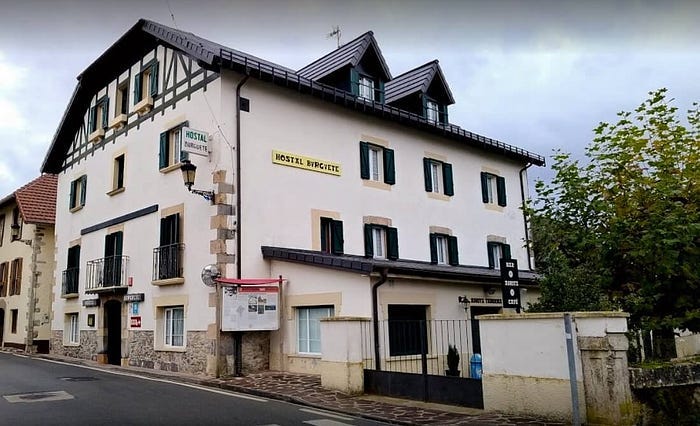
Where they actually fished is harder to pin down - some claim that it was at the village of Aribe, which is some 10km walk from Burguete (specifically at the site of ‘Los Baños’) - the Irati river doesn’t actually flow through Burguete. The descriptions of the walk to the fishing spot in the novel would square with somewhere like Aribe, and there is mention of a dam which is definitely in place near the village.
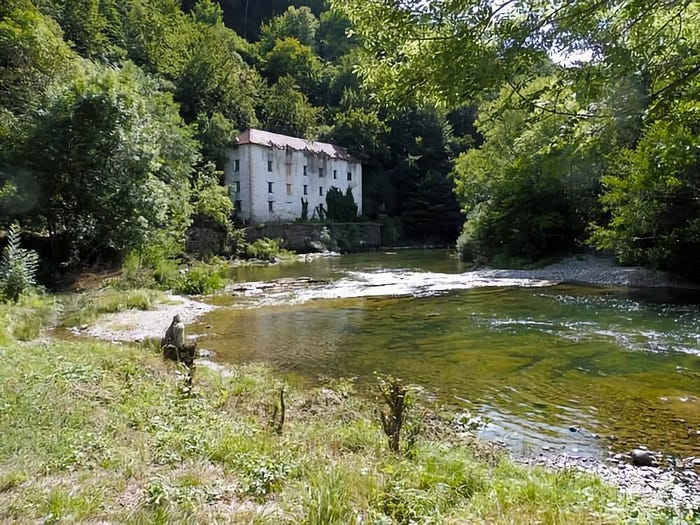
By the following year the party had mutated to include Bill Smith and Don Stewart (a composite of these two became the character of Bill Gorton in The Sun Also Rises). This time (1925), the quality of the fishing seemed to have declined precipitously - Hemingway reported to his mentor Gertrude Stein that the stream was ‘ruined by logging and running logs down - all the pools cleaned out - trout dead’. The relative disappointment of this visit was a harbinger for the messy and fissaporous experience to follow at the fiesta down in Pamplona. More of that in another post.

So, turning to the novel itself, the characters Jake Barnes (a version of Hemingway himself, although it is hinted at that Jake was rendered impotent by a war injury - the author was wounded when serving was an ambulance driver for the Red Cross at the Italian front at Piave in 1918, an incident that forms part of his next novel, A Farewell to Arms (1927)) and Bill Gorton take the bus up from Pamplona at 2pm. True to form, an awful amount of drinking takes place on the open top deck, despite it being baking hot and having consumed ample wine with lunch beforehand. There are colourful descriptions of ‘Basque peasants tanned the color of saddle leather’ and dressed in black smocks offering around their wine-skins (botas) At a halt at an inn (posada) en route, at least five rounds of aguardiente (fire water) are partaken of. Some constitution!
Soon after they arrive at Burguete: ‘As we came to the edge of the rise we saw the red roofs and white houses of Burguete ahead strung out on the plain, and way off on the shoulder of the first dark mountain was the grey metal-sheathed roof of the monastery at Roncesvalles’. After having their bags checked by an officious guardia civil, they head to the inn. It was pretty chilly up there in the mountains after the heat of Pamplona: ‘It was cold in the inn and the wind was starting to blow outside (…)We washed, put on sweaters (…) and it was so cold you could see your breath’. Jake is shocked at the excessive cost of a room (12 pesetas): ‘Why, we only paid that in Pamplona!’ but is pacified when he learns that the wine is included (phew!). They spy a cupboard full of liqueur bottles and order a hot rum punch but complain that it doesn’t contain sufficient rum, so Jake helps himself to extra spirt from the cabinet. Soon, dinner follows - vegetable soup, fried trout and ‘some sort of stew and a big bowl full of wild strawberries’. Jake is happy that ‘we did not lose money on the wine, and the girl was shy but nice about bringing it. The old woman looked in once and counted the empty bottles’. I’m pretty sure they went over their 14 units a week in just one afternoon.
The next morning they drink coffee ‘out of big bowls’ and eat buttered toast, although Jake notes that ‘rather, it was bread toasted and buttered’ (not sure what the difference is…). Then they take their fishing gear and two bottles of wine, and start a lengthy hike to the fishing spot, across beautiful hilly country. After walking a fair distance already, Jake signs that ‘We have to follow this road along the ride, cross these hills, go through the woods on the far hills and come down to the Irati valley.’ Bill responds ‘That’s a hell of a hike’ and Jake clarified that they have to ‘go like hell to get there a back and have any fishing at all’. Before they start on the fishing, getting their priorities right, they store their bottles of wine in a nearby spring that Jake exclaims was ‘so cold my hand a fist felt numbed’. Lunch is chicken and hard boiled eggs from the inn, and those two cold bottles of wine which seem to disappear in a trice: ‘Is that all we’ve got?’ ‘Only the two bottles’. Unsurprisingly enough a long nap ensues - when Jake wakes ‘it was late in the afternoon and the shadow from the trees was long’. They undertake the long reverse walk back to Burguete, arriving after dark. Altogether they spend almost a week at Burguete, fishing and swimming during the day ‘We found a stream with a pool deep enough to swim in’ and in the evening ‘we played three-handed bridge with an Englishman names Harris [you can almost feel the tweed!], who had walked over from Saint Jean Pied de Port and was stopping at the inn for the fishing (…)He was very pleasant and went with us twice to the Irati River.’
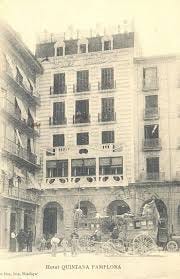
On their last day, the group of three walk up to Roncesvalles, where they combine the sacred (‘It’s a remarkable place’, referring to the monastery) with more of the profane: ‘Isn’t that a pub across the way? Or do my eyes deceive me?’….’We had a bottle of wine apiece (…)How about another bottle around?’ After lunch back at the inn, they catch the bus back to Pamplona, arriving late afternoon in front of the Hotel Montoya on the Plaza del Castillo - in real life the former Hotel Quintana, site of several key scenes in The Sun Also Rises.
And there we leave Ernest Hemingway, Jake Barnes and the crew to plunge into a carnivalesque alcohol-fuelled week of festivities.
*The Sun Also Rises was published as Fiesta in the UK ( in fact the working title was Fiesta: A Novel), possibly because it was presumed that the British wouldn’t know what to make of the classical reference to Ecclisiastes (‘One generation passeth away, and another generation cometh; but the earth abideth forever… The sun also ariseth, and the sun goeth down, and hasteth to the place where he arose…’ ). The use of this quotation is linked to a remark by Gertrude Stein to Hemingway that his was a ‘lost generation’, coming after the horrors of the First World War. Some argue that this alludes to the futility of life itself; others take a more positive slant, that generations come and go but the earth carries on existing and the sun always rises.
Some of you will know how fascinated I am with this novel (and all things Hemingway); witness the fact that I have the cover artwork for the first edition tattooed on my arm!